The word prime appears frequently in the world of luxury property. Prime Central London. Prime country homes. Prime regional markets. Super-prime property. It sounds straightforward enough: expensive homes in desirable places.
But what actually makes a property prime?
Perhaps surprisingly, there is no single UK price at which an ordinary property suddenly becomes a prime one. A £2 million home can occupy a very different position in its local market depending on whether it is in Cheshire, Cornwall or central London.
Prime property is therefore better understood as a position within a market rather than a particular price bracket.
It is where location, scarcity, quality and desirability come together, usually at the very top of the local residential market.
At a Glance: What Does Prime Property Mean?
- Market position: Prime generally refers to homes at the top end of their particular local market.
- Location: The most desirable streets, neighbourhoods, villages or settings tend to command prime status.
- Scarcity: Features that cannot easily be reproduced can have a significant influence on value.
- Quality: Architecture, condition, proportions and specification still matter, even within the best locations.
- Local context: There is no single UK price threshold for prime property.
- Prime vs luxury: The terms overlap, but they do not mean exactly the same thing.
- Super-prime: A term usually reserved for the very highest-value end of an already prime market.
- Buyer demand: Prime markets often attract buyers whose decisions are influenced by lifestyle and scarcity as much as conventional affordability.
What Does Prime Property Actually Mean?
There is no statutory definition of prime residential property. Instead, property researchers tend to define it by where a home sits within its individual market.
Knight Frank describes prime property as the most desirable and most expensive property in a particular location, generally representing the top 5% of that market by value. Savills uses a slightly wider definition, typically referring to the top 5% to 10% of a regional housing market.
The difference between those definitions is useful in itself. It demonstrates that prime is not an exact price band.
It describes the upper tier of a market. That distinction matters because residential property remains intensely local.
Prime Is Relative to Where You Are
Imagine two properties offered at exactly the same price. One might be among the most valuable and sought-after homes to come to market in its area. The other might sit comfortably within the middle of an established luxury neighbourhood. Their price is identical. Their market position is not. This is why a national figure for “the price of prime property” is of limited use.
A substantial country house in Cheshire may sit at the very top of its local market at a value that would purchase a very different type of property in Mayfair or Knightsbridge.
Even within the same county, markets can vary considerably. A particular village, private road or rural setting can command a premium compared with another location only a short drive away.
Cheshire provides a good example. Alderley Edge, Wilmslow and Prestbury are within the affluent Cheshire Golden Triangle, while places such as Knutsford, Bollington and Tarporley are among the county’s desirable residential markets.
Prime property is therefore not simply about asking: How much does it cost? The more useful question is: Where does it sit within the market around it?

Is Prime Property the Same as Luxury Property?
Not quite. The two frequently overlap, but they describe slightly different things.
- Prime is predominantly about market position. It considers desirability, value and how a property compares with others in its location.
- Luxury is more experiential.
It might describe the architecture, craftsmanship, privacy, space, technology, service or overall quality of life a property provides.
A beautifully designed home can feel extremely luxurious without being among the top 5% of its market by value.
Equally, a property may command a prime price largely because of its extraordinary location or scarcity, even though its interiors require complete renovation.
That is one of the reasons the upper end of the property market can be so interesting. Value does not always sit neatly inside the building. Sometimes it is in the land beneath it, the outlook beyond it or the address written on the envelope.
Location Still Does Much of the Heavy Lifting
Property has always been closely tied to location, but the principle becomes particularly visible in prime markets. At this level, buyers are often paying for something that cannot simply be recreated somewhere else.
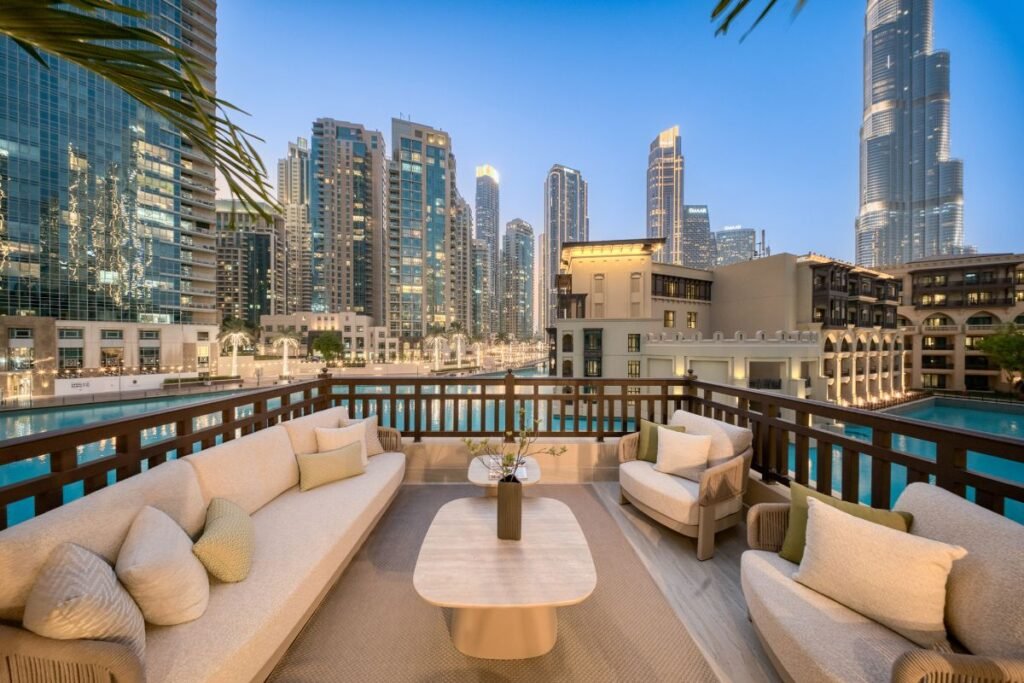
A house on one side of a road may have uninterrupted countryside behind it. Another may sit within walking distance of a particularly desirable village. A London apartment might overlook a garden square rather than another building. A coastal home may have direct access to the water. A country property could combine privacy with remarkably convenient transport connections.
Even within highly desirable areas, certain streets, plots and orientations can become considerably more valuable than their neighbours. This creates micro-markets within prime markets.
The postcode matters. But sometimes the exact position within that postcode matters even more.
Scarcity Is One of Prime Property’s Most Powerful Qualities
There are some things money can improve after buying a property.
- A kitchen can be replaced.
- Bathrooms can be redesigned.
- Technology can be upgraded and landscaping transformed.
- Other characteristics are much harder to manufacture.
- A particularly large plot.
- A protected outlook.
- Mature grounds.
- Period architecture.
- Direct water frontage.
- A rare lateral apartment.
- An unusually private position.
- A home in an area where very little ever comes to market.
Scarcity becomes especially important at the top end because buyers often have the means to improve a property but considerably less ability to change its fundamental circumstances.
That helps explain why two apparently similar homes can achieve very different values. One contains something the market can replace. The other does not.
Prime property is not simply the most expensive home. It is the property that combines location, scarcity and quality in a way its local market cannot easily replace.
LOVE LUX LIFE

Being in a Prime Location Is Not Enough
An exceptional postcode does not automatically make every property within it exceptional. Condition still matters. So does layout.
Architecture matters, as does natural light, privacy, proportions, outside space and the relationship between the house and its setting.
At the very top of the market, buyers can become particularly selective because they are often choosing between properties rather than being forced to transact.
Savills’ current analysis of Prime Central London describes buyers as carefully weighing quality, location and lifestyle against both price and alternatives elsewhere.
A compromised home can therefore struggle even in one of the best locations. Perhaps it is overlooked, the layout doesn’t work, the house requires significant expenditure, the plot is unusually small. Or the asking price assumes that the postcode alone will compensate for everything else.
Prime buyers may have considerable resources. That does not necessarily make them indiscriminate.
What Is Prime Central London?
Prime Central London, often shortened to PCL within the property industry, is one of the most established prime residential markets in the world.
It generally encompasses some of central London’s most desirable neighbourhoods, including areas such as Mayfair, Knightsbridge, Belgravia, Chelsea, Kensington, Notting Hill and Marylebone, although exact geographical definitions can vary between property firms and research indices. Knight Frank’s current London portfolio, for example, groups many of these neighbourhoods within its Prime Central London market. Knight Frank Publications
What makes PCL interesting is not simply its prices. There is a finite stock of property in many of these locations, while demand can come from both domestic and international wealth. Historic architecture sits alongside a relatively small supply of exceptional new development. Particular garden squares, streets and buildings can become markets in their own right.
A buyer may therefore be choosing not simply between two three-bedroom apartments, but between very specific combinations of address, building, outlook, floor, condition and provenance.
At this level, seemingly small differences can carry considerable value.

Prime Property Extends Far Beyond London
The language of prime property can sometimes sound disproportionately London-focused.
The market itself is not.
Britain has significant prime residential markets across its cities, villages, countryside and the coast.
The Cotswolds, Surrey, Oxfordshire and Hampshire contain established country and commuter markets. Edinburgh has its own highly sought-after addresses, while desirable parts of Cheshire and the wider North West attract buyers looking for space, connectivity and high-quality family homes.
Prime property can take very different forms in each.
In London, scarcity may mean lateral space, a particular address or private outside space.
In the countryside, acreage, privacy, equestrian facilities or an exceptional view may matter more.
In Cheshire, the combination of attractive towns and villages, countryside, schools and access to Manchester and major transport connections contributes to the appeal of its upper-end market. Knight Frank describes Cheshire as containing some of the North West’s most desirable locations, including its well-known Golden Triangle.
This is why applying one definition of a “luxury property” across Britain rarely works particularly well. Prime is local by nature.
What Does Super-Prime Property Mean?
Once property reaches the very highest end of a prime market, another term begins to appear: super-prime. Again, there is no universal legal definition.
In London’s residential market, £10 million and above is commonly used by major property researchers as a super-prime benchmark. Knight Frank has used £10 million-plus when analysing London’s super-prime transactions, while Savills’ current research also monitors London sales above £10 million when discussing the resilience of the very top end.
Internationally, the currency naturally changes. Knight Frank’s Global Super-Prime Intelligence research, for example, tracks residential transactions above US$10 million across selected global markets.
You may also see terms such as ultra-prime or trophy property. These are useful descriptions, but they should not be mistaken for precisely regulated market categories.
At this end of the market, the individual asset often becomes more important than the label. A historically significant house, exceptional penthouse or estate that has not changed hands for generations can create its own pricing context.
What Makes a Property “Best in Class”?
Prime describes a segment. Prime describes a segment. It is a phrase frequently used at the upper end of the market to describe the properties that represent the strongest examples of their kind. That does not always mean the largest or most expensive.
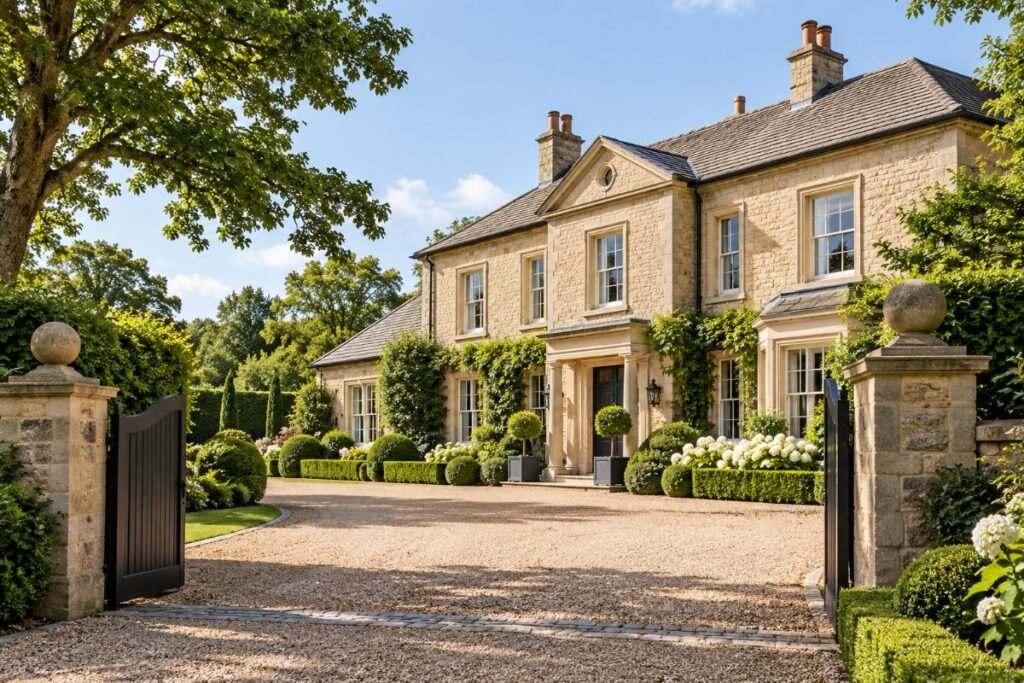
- A best-in-class country house might combine outstanding architecture with beautifully maintained grounds and a genuinely private position.
- A city apartment might have an exceptional floorplan, uninterrupted views, outside space and a building known for excellent service.
- A period townhouse might retain extraordinary original features while also providing the comfort expected of a contemporary home.
These are properties where compromises become increasingly difficult to identify. And because there are relatively few of them, they may attract attention even when the wider market is more cautious.
Prime Does Not Mean Immune From the Property Market
There is sometimes an assumption that scarce, expensive property simply rises in value regardless of what happens elsewhere. It does not. Prime markets are still affected by taxation, interest rates, political uncertainty, currency movements and changes in buyer behaviour. They can also behave very differently from the mainstream housing market.
The latest official UK House Price Index, for example, put the average UK property at £273,000 in July 2026, while specialist property firms separately track prime residential segments because activity and pricing at the top end do not necessarily follow the same pattern as the wider market.
International wealth introduces another dimension. Knight Frank notes that prime markets can have a significant international buyer profile, while its recent research highlights increasingly mobile wealth influencing luxury property demand across different cities and lifestyle destinations.
Prime property may be scarce. It is not detached from economics.
Does a Prime Property Have to Be Perfect?
No. In fact, some of the most valuable properties come to market in need of considerable work.
A house may require complete refurbishment and still command an exceptional price because the things that matter most cannot be recreated.
- The plot is extraordinary.
- The position is unique.
- The architecture is important.
- The address rarely becomes available.
Buyers at the top of the market may be willing to undertake substantial work if the underlying asset justifies it. Conversely, an immaculate property in a weaker position cannot always overcome the limitations of its location. This is perhaps where the phrase “good bones” becomes especially relevant.
Finishes are temporary. Fundamentals tend to last much longer.
Frequently Asked Questions
The Love Lux Life View

Perhaps the most useful thing to understand about prime property is that price is the result, not the entire definition.
The strongest homes at the top of the market tend to combine qualities that buyers value with characteristics that are difficult to replace. An exceptional location, the right architecture, privacy, a rare plot, a particular view. Or simply the chance to own something that seldom becomes available.
That is also why prime property changes from one market to another. The best house in a Cheshire village does not need to resemble a Mayfair apartment or a Cotswolds estate to occupy an equally important position within its own market.
For Love Lux Life, that is what makes prime property more interesting than a price threshold. It is not simply about spending more. It is about understanding what makes a particular home difficult to replicate.
Image note: Images in this article are for illustrative purposes and were created for Love Lux Life using generative AI.
Read more Property news with Love Lux Life