Jaguar has officially unveiled the Jaguar Type 01, the all-electric four-door grand tourer tasked with ushering one of Britain’s most famous automotive names into an entirely new era.
Revealed in New York this week, the Type 01 is the first production Jaguar developed around the marque’s new design philosophy and dedicated Jaguar Electric Architecture. It is also the most powerful, technologically advanced and aerodynamic Jaguar road car yet.
But the significance of Type 01 goes considerably further than its specifications.
Nearly two years after Jaguar revealed the dramatic Type 00 concept, and the controversial rebrand that accompanied it, this is the first time customers can see what the company’s reinvention looks like as an actual production car.
For a marque with more than 90 years of history, Type 01 represents less an evolution than a reset.
At a Glance
| Price | From £130,000 |
| Power | Up to 1,030PS |
| Torque | 1,365Nm |
| 0–62mph | Approx. 3.2 seconds |
| Range | Up to 450 miles WLTP* |
| Battery | 118kWh usable |
| Rapid Charging | Up to 350kW |
| Charging | Up to 200 miles in around 13 minutes* |
| Orders Open | Early 2027 |
| First Deliveries | Second half of 2027 |
| *Manufacturer estimates. Final certification and real-world figures may vary. |
From Type 00 Concept to Production Reality
The Type 00 concept gave the first real indication of Jaguar’s new direction when it appeared in December 2024. Its unusually long proportions, minimalist surfaces and completely reworked identity divided opinion almost immediately.
Type 01 demonstrates just how seriously Jaguar meant it.
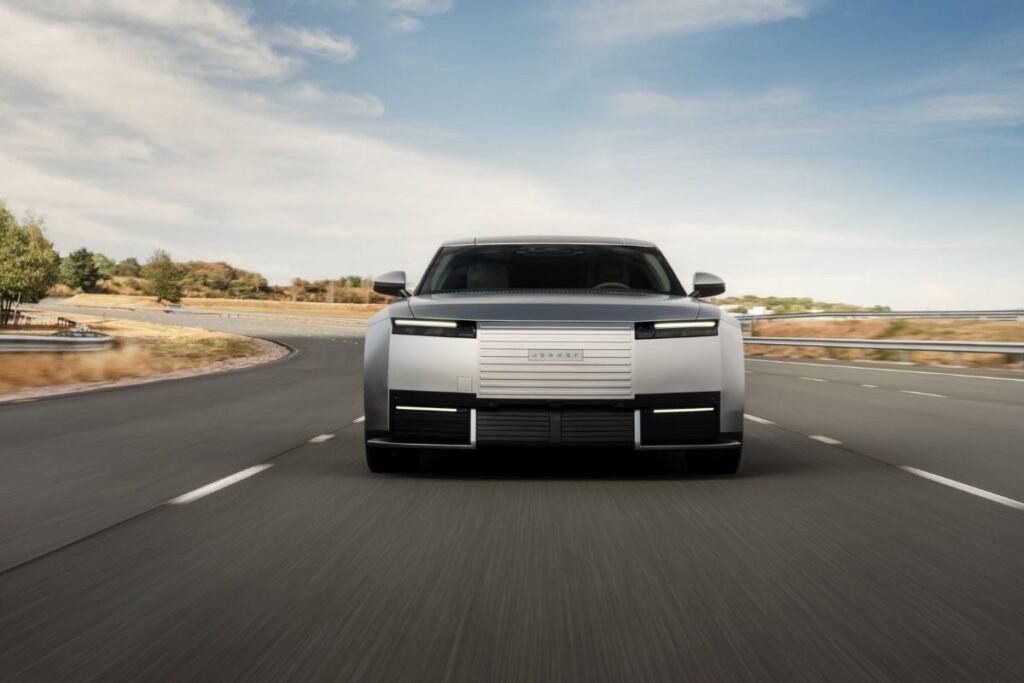
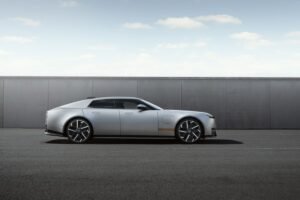
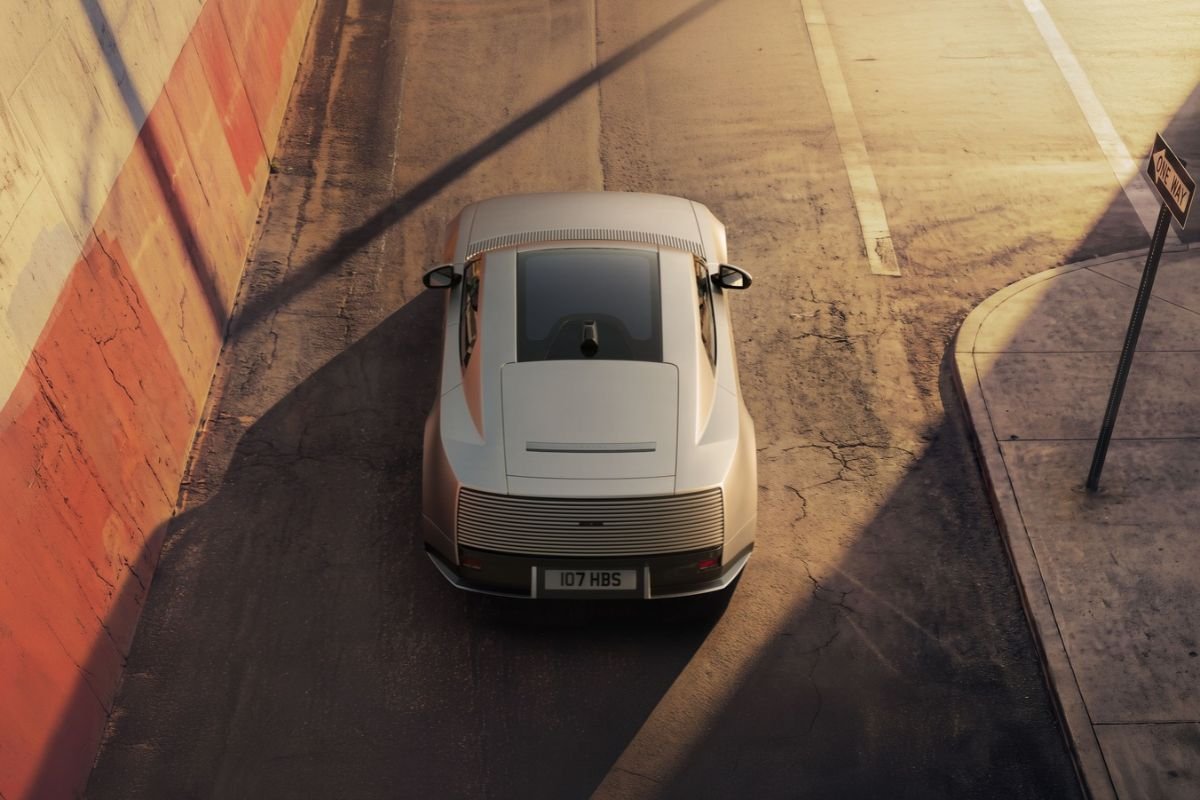
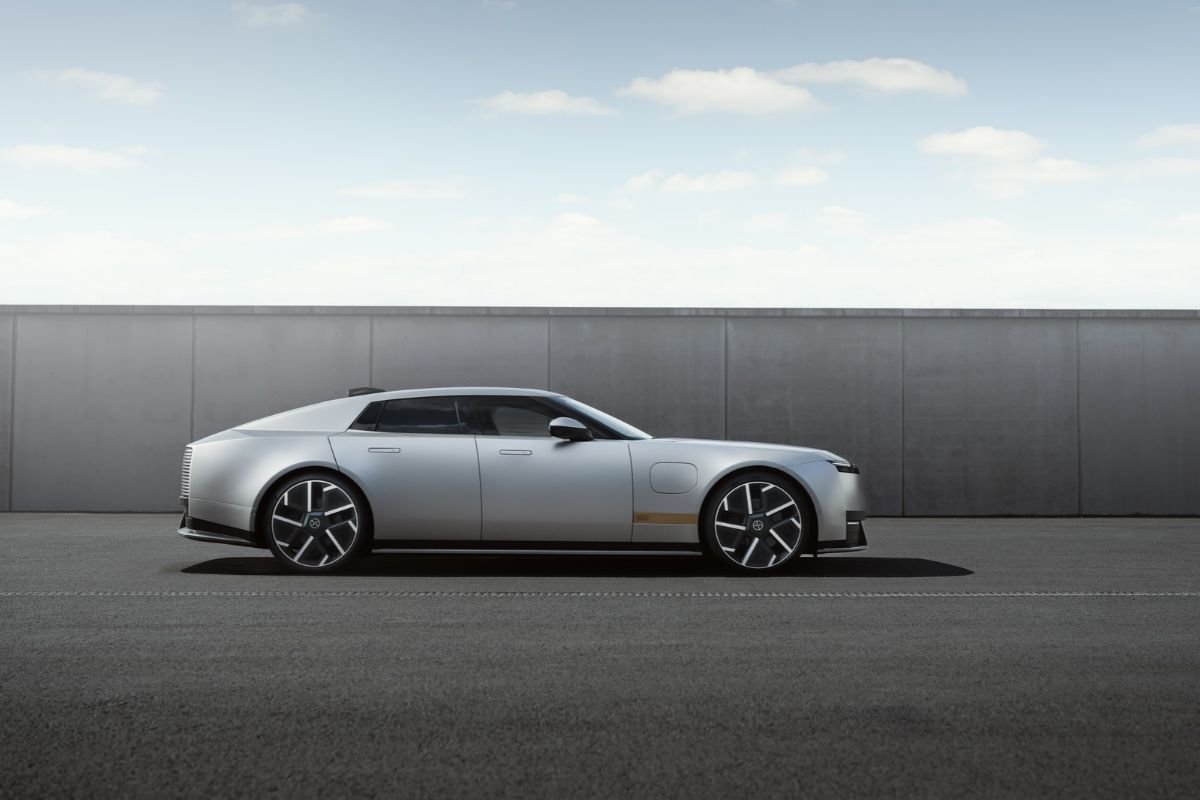
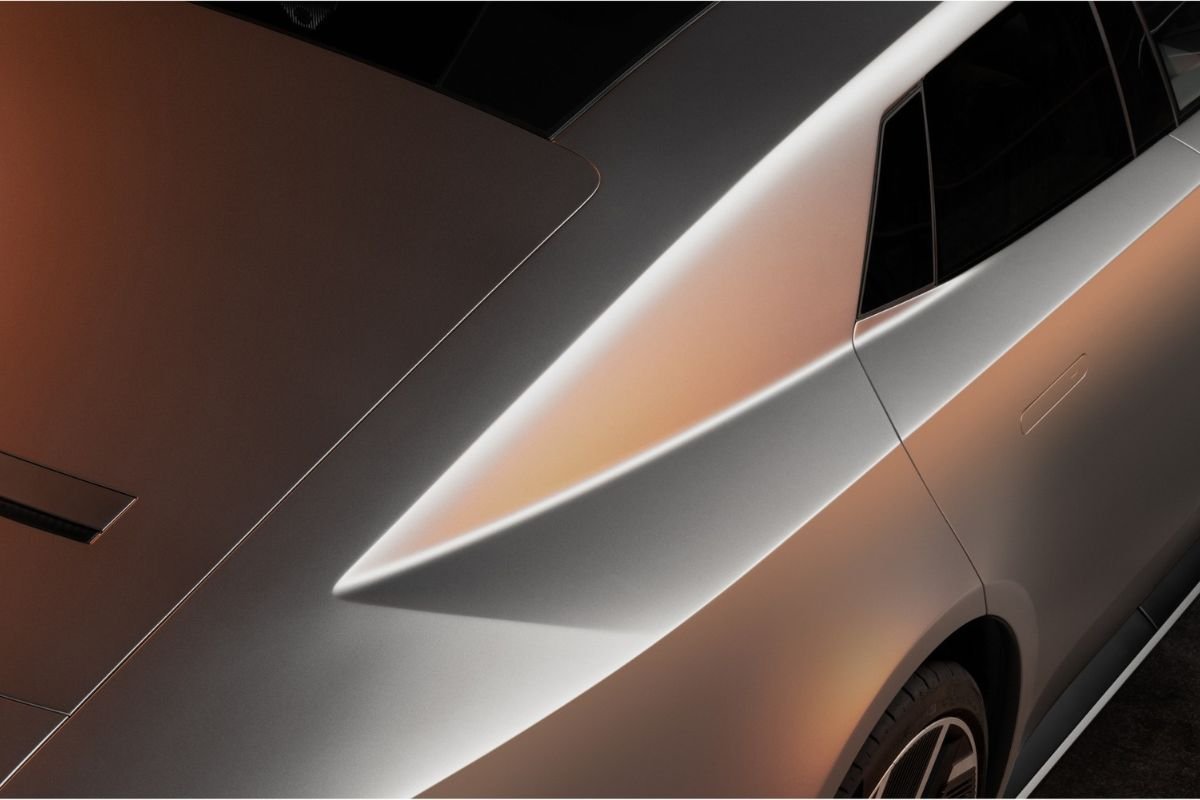
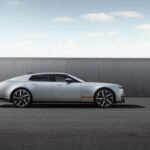
The production car retains the long bonnet, low roofline, extended rear profile and considerable visual presence of the concept, sitting on 23-inch wheels and stretching more than 5.2 metres in length. Jaguar says the proportions were made possible by developing a new electric architecture specifically for the car rather than adapting an existing platform.
The design is deliberately unconventional, but Jaguar says there is still a lineage connecting Type 01 with cars such as the E-type and XJS.
Rather than recreating those models, the company appears to be drawing on some of the things that made them distinctive in the first place: dramatic proportions, visual presence and a willingness to look different.
Jaguar’s own phrase for the philosophy is particularly direct: “a copy of nothing.”
The Most Aerodynamic Jaguar Ever Produced
Despite its deliberately dramatic shape, Type 01 has also been developed extensively around airflow.
Jaguar says more than 7,000 wind-tunnel tests contributed to a drag coefficient of 0.23, making it the most aerodynamic Jaguar yet. Active front vanes manage cooling and airflow, while a three-stage rear spoiler remains concealed until required.
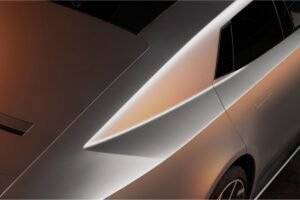
There is also what Jaguar calls the Impossible Panel. The complex aluminium rear-quarter section required to preserve the uninterrupted body shape.
It is perhaps one of the clearest examples of how heavily Jaguar has prioritised design with Type 01.
The company says more than 360 patent applications are associated with the car and the engineering used to turn its design into production reality.
More Than 1,000PS and Up to 450 Miles of Range
Underneath that body sits Jaguar’s new electric platform. Type 01 uses a tri-motor all-wheel-drive system with Intelligent Torque Vectoring, producing up to 1,030PS and 1,365Nm of torque.
Jaguar quotes 0–62mph in approximately 3.2 seconds, while acceleration from 62–112mph takes four seconds. The numbers are considerable, but grand touring ability is equally important to the proposition.
A 118kWh usable battery sits within an 850-volt electrical architecture. Jaguar currently estimates a range of up to 450 miles under the WLTP test cycle, or 400 miles using the US EPA measure.
Those figures have yet to complete final certification and real-world range will vary.
Rapid DC charging at up to 350kW is designed to add as much as 200 miles of range in around 13 minutes under suitable conditions.
Air suspension, active dampers, all-wheel steering and 50:50 weight distribution are intended to balance the comfort expected from a long-distance GT with the driving character Jaguar wants to retain.
Inside, Jaguar Is Rethinking What Luxury Looks Like
Perhaps the most interesting indication of Jaguar’s new direction is inside. Rather than relying heavily on the traditional combination of leather, gloss wood and chrome, Type 01 adopts a far more architectural approach.
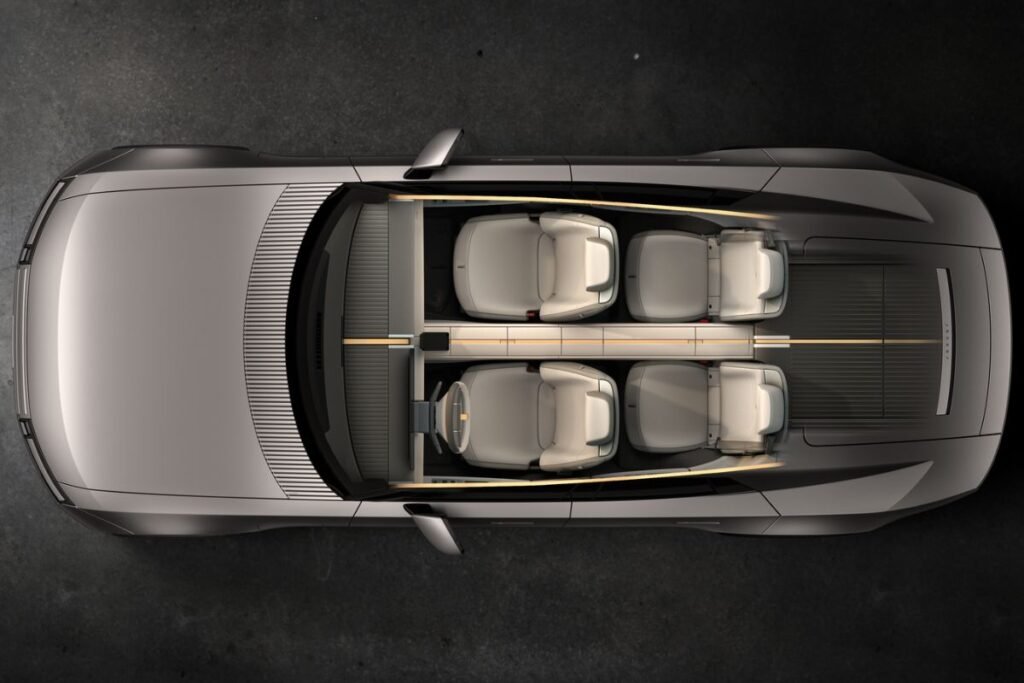
A central spine runs through the entire cabin, visually dividing it into four individual seating spaces. Brass-inspired anodised aluminium detailing follows that same line through the interior.
The material palette takes inspiration from travertine stone, with layered neutral tones and a combination of Kvadrat DuoWeave wool-blend textiles, optional leather and Ultrafabrics NeoGrain.
Even the carpeting wraps upwards into the lower doors and pillars, giving the interior a more enveloping feel.
Technology is prominent but deliberately integrated into the architecture.
A 24-inch single-glass OLED display sits directly in front of the driver, with an additional seven-inch touchscreen handling frequently used functions. Rear passengers receive another seven-inch display of their own.
There is also a full-width Meridian Panoramic Soundbar, heated and cooled seating, a panoramic roof and a hot-stone massage effect for the front seats.
Rather than presenting luxury as simply more equipment or more decoration, Jaguar appears to be building the experience around materials, light, sound and space.
That feels particularly relevant to the way modern luxury is evolving, towards experience, atmosphere and thoughtful detail rather than excess alone.
Jaguar Wants to Become Culturally Relevant Again
Jaguar’s Managing Director Rawdon Glover has been unusually clear about the ambition behind the car.
“Jaguars should be objects of desire and culturally relevant – that’s their natural habitat and where Jaguar is returning.”
RAWDON GLOVER
Managing Director, Jaguar
That may explain why the New York premiere looked as much like a cultural event as a conventional car launch.
Actor Florence Pugh was announced as Jaguar’s first brand ambassador of the new era, while singer-songwriter Sienna Spiro performed at the launch in West Chelsea. The event also incorporated fashion, food, design and art alongside the car itself.
It is a deliberate attempt to position Jaguar within a much broader luxury world rather than treating it solely as an automotive brand.
That makes Type 01 particularly interesting. The car is not simply being asked to compete on performance and range. It also needs to make Jaguar desirable to a new kind of customer.
Jaguar is Moving Considerably Further Upmarket
That ambition becomes even clearer when you look at the price. Type 01 will start from £130,000 in the UK, with orders expected to open in early 2027.
That places the new Jaguar firmly above much of the marque’s previous range and supports a strategy centred on fewer, higher-value cars rather than pursuing volume.
The United States is an especially important part of that strategy. Reuters reports that Jaguar sees considerable growth potential among affluent US consumers, particularly technology-oriented buyers, even as the global market for high-end electric vehicles becomes increasingly competitive.
This makes Type 01 interesting beyond the automotive world.
Jaguar is effectively testing whether a heritage luxury brand can change its audience, dramatically change its product and substantially change its price positioning, while retaining enough of its identity to remain recognisably Jaguar.
Still Designed, Engineered and Built in Britain
For all the attention surrounding its New York debut, Type 01 remains fundamentally British.
Jaguar says the car has been designed, engineered and developed in the UK, with production beginning at JLR’s Solihull operations in 2027.
Its electric drive units and battery packs will be produced in Wolverhampton, while pressed body panels will come from Halewood in Merseyside.
Almost 9,000 employees at JLR’s Solihull site have already been retrained for electric-vehicle production as part of the wider manufacturing transformation.
The name itself also carries a little of that transition.
According to Jaguar, “Type” references some of its historic models, “0” represents zero tailpipe emissions and “1” marks the first vehicle of the new generation.
Orders are due to open in early 2027, with first customer deliveries expected during the second half of the year.




The Jaguar Type 01 was never going to be a quiet return.
From its proportions and unconventional interior to its four-figure power output and £130,000 starting price, almost every element of the car has been designed to signal that Jaguar has no intention of simply continuing where it left off.
Whether that transformation ultimately succeeds will depend on far more than visual drama.
At this level of the market, buyers will expect exceptional craftsmanship, technology, service and ownership experience to accompany the new positioning. The scale of the change inevitably comes with risk. Jaguar is asking customers to accept a very different idea of what the marque should represent.
However, there is something intriguing about the ambition. Luxury can easily become homogenised, particularly as manufacturers adopt similar electric technologies, minimalist interiors and digital interfaces.
Jaguar has chosen the opposite route. It has attempted to become more distinctive, not less. The Type 01 will undoubtedly divide opinion.
Perhaps that is precisely the point.